PSA's Verification Checklist When Buying Slabs: Case Marks, Labels, and Certification Numbers
From marks left by broken ultrasonic welds to cert verification and deactivated stolen numbers
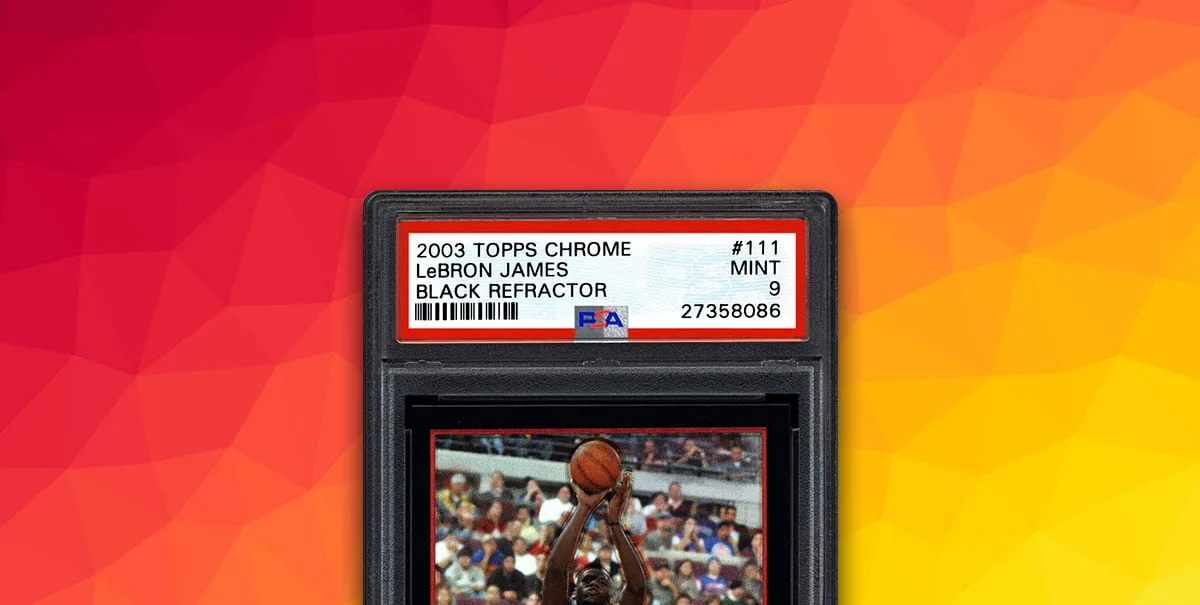
A "slab"—a card sealed in a case with a grading label—serves as an authentication company's mark of guarantee. Consequently, methods have also emerged to counterfeit slabs or pry open authentic cases to insert different cards. Here is a beginner-friendly breakdown of the verification methods outlined by PSA in its official guide "PSA Security: A Buyer's Guide" and security pages.
Cases: A Design That Leaves Marks When Opened
PSA has used "tamper-evident" cases since 1991. They feature a construction where two pieces of plastic are joined via ultrasonic welding (sonic weld). PSA explains that this differs from being entirely "tamper-proof," as cards must be able to be removed without damage and transferred to a new holder if a case becomes scratched or cracked. Instead, forced entry leaves distinct traces.
| Area to Check | PSA Guidelines | |---|---| | Edges | "Frosting" where the plastic turns hazy/white, microscopic cracks | | Feel in Hand | Welded cases exhibit almost no flex. If the weld is broken, the case will flex again | | Resealing Marks | Even if glued shut, pressing the edges with a fingernail can cause them to separate with a cracking sound | | Label | On genuine labels, text from the reverse side shines through when held up to a close light source. If a fake front has been pasted over, it will be too thick to show through |
PSA noted that counterfeit attempts mimicking older label styles also occur.
Label Features and Certification Lookup
PSA updated its label security in June 2017. The "LightHouse" logo appears to turn on and off as the holder is tilted, while "fugitive ink" patterns on both the front and back dissolve upon contact with cleaning chemicals, preventing labels from being wiped clean and reused. Ultraviolet light reveals small logo patterns on the back logo, and a QR code on the back provides direct access to Cert Verification. Since December 2015, the certification number and barcode have also been included on the reverse of the label.
Certification numbers can be checked on the PSA website or mobile app. In the app, users can scan the label or QR code with a camera or enter the number manually. According to PSA FAQs, cards scanned directly by PSA using "SecureScan" feature high-resolution front and back images on the lookup page, which PSA notes is helpful for verifying item details prior to purchase. Customer-submitted photos cannot be uploaded.
Certification numbers can also be deactivated. In connection with an incident on October 13 where a FedEx truck carrying orders from its Santa Ana facility was burglarized, PSA announced on October 23 that it had published a list of 6,451 stolen items and deactivated the certification numbers for all corresponding graded collectibles.
CGC allows users to verify certification numbers and grades via the "Verify Certification" menu on its website, while Beckett (BGS) offers serial number lookups through its "Beckett Mobile" app.
When Buying Slabs from Abroad
In domestic secondhand transactions or direct overseas purchases, it is difficult to inspect physical items in advance. In line with PSA's recommendations, buyers should obtain photos showing the certification number before payment, check it directly through the official lookup tool, and inspect the item for the marks listed in the table above upon delivery. PSA states that knowing the seller is fundamental; buyers may request PSA review prior to purchase for suspicious items, or make transactions conditional upon PSA verification. It advised extra vigilance if an unknown party makes initial contact or if an offer seems too good to be true.
Sources
- PSA · Buyer's Guide (Accessed 2026-11-07)
- PSA · Security (Accessed 2026-11-07)
- PSA · New Look, New Technology (2017-06-14)
- PSA · Second Barcode (2015-12-02)
- PSA · FAQ (Accessed 2026-11-07)
- PSA · Theft Update (2026-10-23)
- CGC · Verify (Accessed 2026-11-07)
- App Store · Beckett Mobile (Accessed 2026-11-07)
This article was written with the help of AI based on public sources. Responsible: 김태희 기자 AI principles →
This article was machine-translated from Korean with AI. Original →