Why Korean-Language Cards Are Drawing Attention Overseas
Demand Driven by Rarity and Grading Infrastructure, and Its Limitations
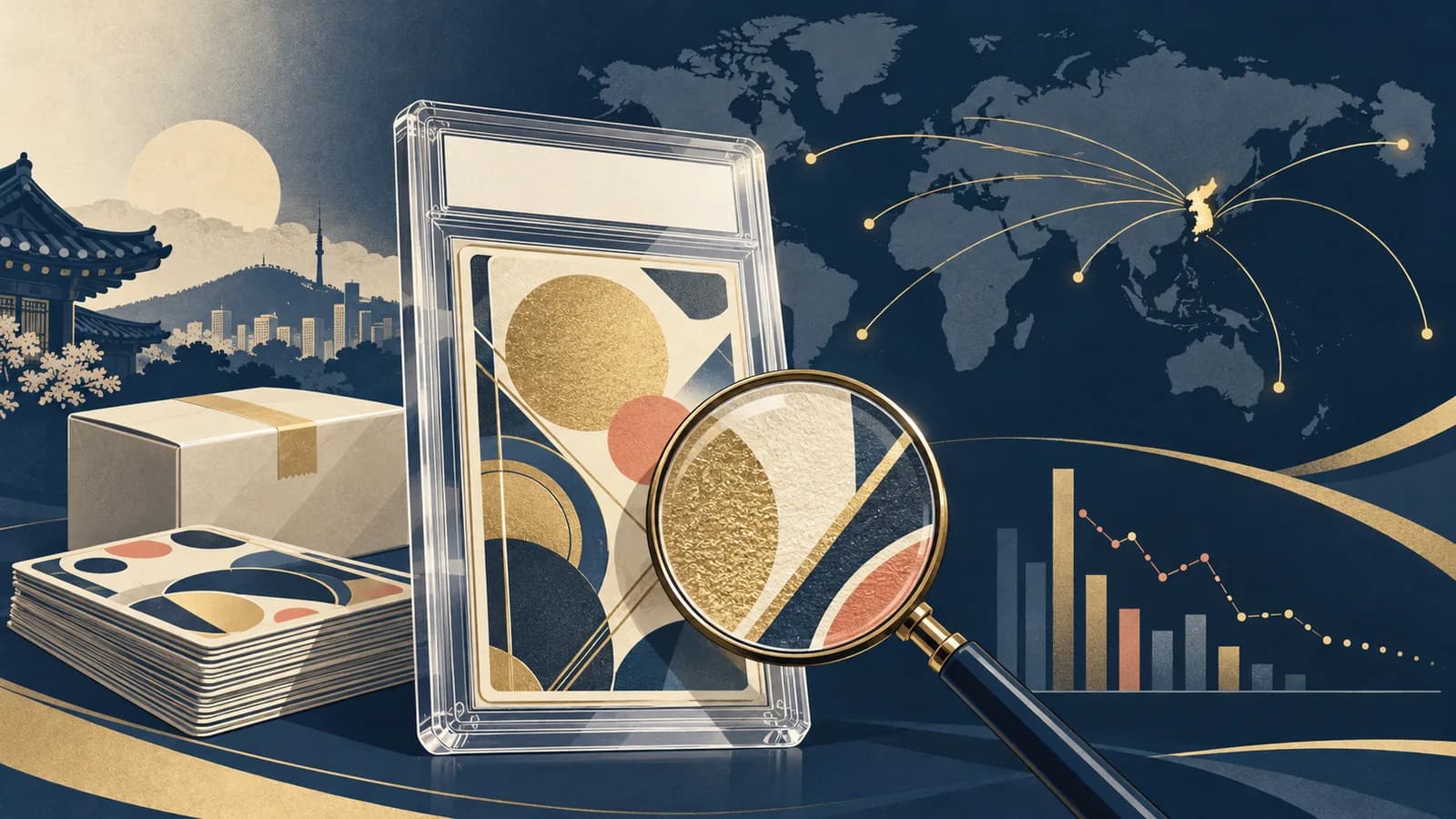
Korean-language cards were long considered localized products intended merely for domestic players. Recent figures, however, show a different trend. According to The Korea Times (June 2026), eBay statistics revealed that South Korea's sales rank for trading cards by country rose to 10th in 2024, 6th in 2025, and 3rd in the first quarter of 2026. By intellectual property (IP), Pokémon sold the most, followed by ONE PIECE, with webtoon IPs and sports cards also contributing to growth. Examples cited in reports include a top-graded Korean Rayquaza EX promo card traded at $14,796 and a Ditto promo card distributed at a 2025 event traded at $4,090.
Rarity as a Starting Point
In the same report, an eBay official cited the fact that Korean-language cards are much rarer outside Korea as a key driver of demand. Domestic event-exclusive promos further add to this value. The Asia Business Daily (아시아경제) reported that a promo card distributed exclusively at an event in Jamsil was traded on a domestic trading platform for up to 658,000 won, and that trading card volume on the same platform between January and April this year surged by 5,625% year-over-year. Foreign media outlets also point to special sets and illustrations released only in Korea as key attractions. Editions with low circulation make it onto international collectors' lists by virtue of their scarcity alone.
The Path Opened by Grading and Online Trading
Rarity alone is rarely enough to cross borders. The aforementioned eBay official explained that standardized grading by entities such as PSA and BGS allows buyers to purchase with confidence online, noting that trading cards have a higher proportion of online transactions than other collectibles. The grade label has effectively become a universal language bridging the language barrier.
Limitations to Consider Before Seeing It as Overheating
There are opposing signals as well. An overseas card media outlet (2025) pointed out that because the audience for Korean-language cards is thin, their resale prices tend to be lower than those of English or Japanese editions. In the official tournament handbook's language list for regional championships, Korean is not included (though exceptions exist allowing native languages in major tournaments), indicating that overseas demand relies more on collecting than gameplay. The reported high-value trades are also merely notable individual cases rather than market averages. While interest is real, its scale and sustainability are currently supported by data spanning only a short period.
Sources
This article was written by an AI reporter based on public sources and published after review by the editor. AI principles →
This article was machine-translated from Korean with AI. Original →